

Radon Testing

Radon In Air

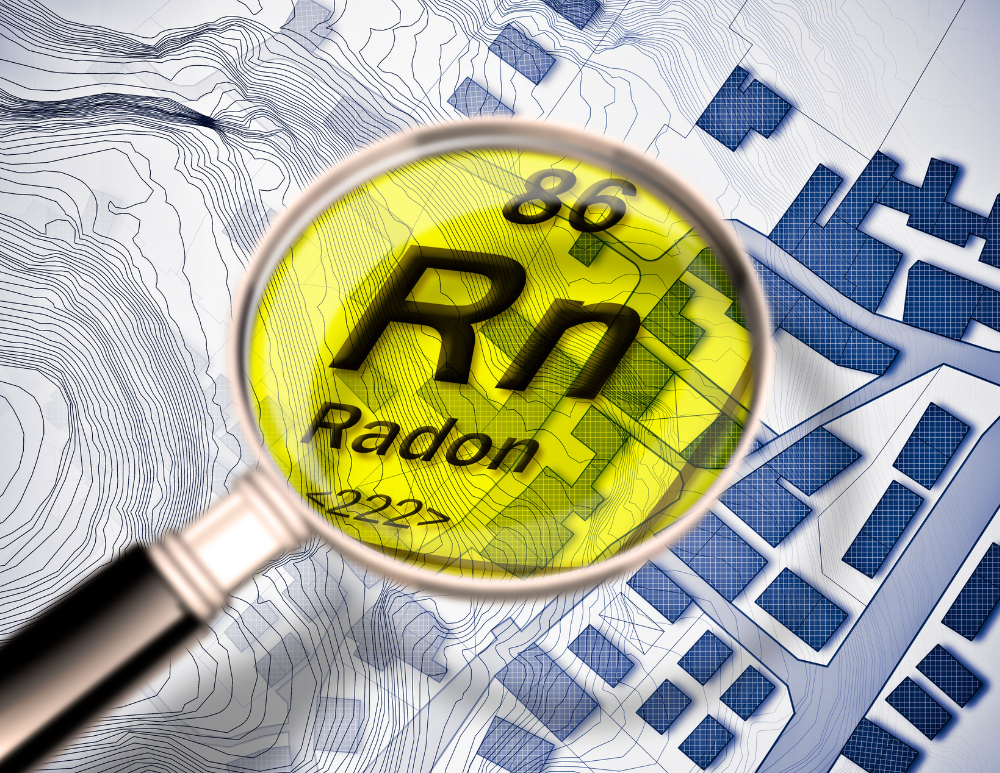
Radon, a naturally-occurring radioactive gas, is the second leading cause of lung cancer and the number one indoor air pollutant in the country.

Average outdoor concentration of airborne radon in Maine is 0.5 to 0.8 picocuries per liter of air (pCi/L). Maine Center for Disease Control (CDC) recommends that mitigation should be considered when the indoor concentration of radon in air is 2.0 pCi/L or more but is dependent on how the space that was tested will be used. For more information, contact the CDC. The Environmental Protection Agency (EPA) recommends mitigating when the indoor concentration of radon in air is 4.0 pCi/L or more.

One in three Maine homes will have a problem with elevated airborne radon levels.

Radon In Water

Radon in the soil dissolves into the groundwater and may be present in well water. Radon gas escapes readily from running water and becomes a pollutant in your home’s air. The problem arises when you are running water in your shower, dishwasher, washing machine, or other water-using appliance.

Maine CDC recommends consider mitigation of radon in water if levels exceed 4000 pCi/L but is dependent on the radon in air concentration. The EPA recommends mitigation of radon in water for levels exceeding 10,000 pCi/L.

Our Radon Testing Service

Note that air and water samples collected for radon testing must be received by the laboratory within four days after the radon water sample has been collected or the radon air vials have been closed.

When Bying or Selling a Home

Radon testing on a property for sale in the State of Maine must be done by a State Registered Radon Service Provider. Our Radon Service Providers set testing devices in conformance with Federal EPA and State of Maine testing guidelines. Our Testing Laboratory, registered with the State of Maine, conducts the analysis and issues a report the next business day after the samples are received. Our Radon Professionals can help guide you in your decision-making process.
Monitoring your Own Home​

Radon levels in the soil vary over time, and the effectiveness of radon mitigation systems should be checked periodically. While the State of Maine does not currently require homeowners to test the air or water for radon in their own homes, it is wise to do so about every two years. A homeowner can test for radon at any time with the help of our testing laboratory, Radon Check Inc.

Radon Testing Pricing

  • Radon In Air $175

    With Home Inspection, 48-hour test meeting EPA protocol

  • Radon In Air $200

    Without Home Inspection, 48-hour test meeting EPA protocol

  • Radon in Water $100

    With Home Inspection

  • Radon in Water Call for Quote

    Without Home Inspection

Radon FAQs

Radon is a naturally occurring radioactive gas.

Radon comes from uranium in the soil, which is also radioactive. As the uranium goes through its half-life decay process it creates radon.

Radon gas can travel up to approximately 40 feet from its source through soil (depending on the soil porosity).

Our homes are under a slight negative pressure when closed up. This negative pressure is created by several normal household activities such as using a vented clothes dryer, bathroom vents, kitchen vent and through the use of central heat, wood stoves or fireplaces. Radon can also enter through domestic water, particularly if you have a drilled well.

The radon gas can find its way into the house through the smallest of cracks in a foundation or floor. The radon molecule is so small that if we were to compare it to the smallest of cracks, then a crack the size of a very fine human hair would be larger than the Grand Canyon if the radon molecule was blown up to baseball size.

Radon gas has a half-life of only 3.8 days. It typically reaches equilibrium after about 12 hours. It will vary in concentration over time, due to changes in atmospheric conditions. The radon concentration also changes with activities within the house such as cooking, laundry, heating, etc. but it does not build up when a house is closed over a long period of time as it further decays as part of the natural radiation decay process.

The only known health effect of radon is lung cancer. Radon is the second leading cause of lung cancer, second only to cigarette smoke.

Through the results of thousands of tests in the State of Maine it has been demonstrated that over thirty percent of homes in Maine have elevated radon. The average level in Maine is about 7.3 pCi/L.

A Pico Curie per liter (pCi/L) is a measurement of radiation energy in a liter of air which is one part per trillion. The EPA has established 4pCi/L as the action level.

In the State of Maine only licensed persons can test for radon unless you are an owner or a tenant of the property. Up-Country Building Inspectors has several licensed persons who are properly trained to test in accordance with the EPA’s protocol. We use the state-of-the-art E-Perm technique. Up-Country is licensed by the State of Maine as a radon laboratory. Our tests are analyzed in our own lab assuring our clients of prompt and accurate results.

Up-Country sets a minimum of three test kits, retrieves, analyzes and mails (also faxes) a written report and provides free follow-up consultation over the phone.

In the vast majority of cases radon can be vented out of the house with a sub-slab depressurization system. This system works like a large vacuum cleaner that sucks the air out from under the basement floor and vents it out into the atmosphere above the roof. The components are basic plastic drain pipe (PVC) with the necessary fittings and a high quality fan that connects to the PVC pipe.

Generally the cost runs between $800 and $1500 to have a system installed. The installation of a system generally takes one to two days and needs to be done by a licensed contractor (although home owners can install systems in their own home). Up-Country does not install systems due to the potential conflict of interest.

No, generally tests are taken in the basement as well as the first floor. If results are elevated in the basement but not on the first floor, the decision to mitigate or not would depend on the dose rate (hours of likely exposure to the elevated radon). This needs to be discussed on a case-by-case basis. Follow up consultation is always available to our clients for any of our inspection services.

Ready to Request an Inspection?

Click the button below or call us now:
(207) 883-9876 or
toll-free (800) 244-9876